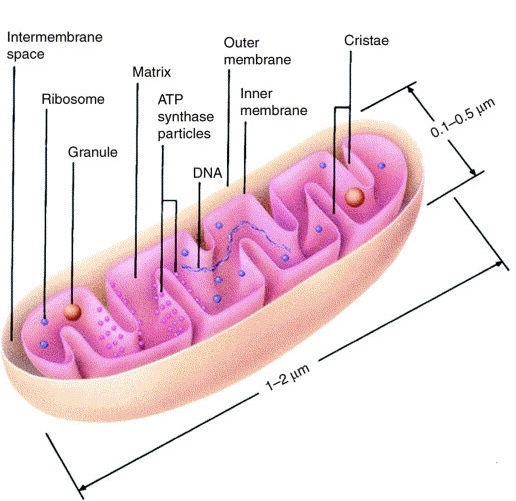
Mitocondria are the part of animals cells that provide usable energy in the form of adenosine triphosphate to the body. Without these mitochondria the human body would have no supply of energy and would therefore fail. A single cell can have up to several thousand mitochondria. The brain and muscle are areas that require a lot of energy, so have a high density of mitochondria to support these needs. Therefore when mitochondria aren’t functioning properly, these parts of the body are often the most affected. This can lead to a wide variety of symptoms, including: Developmental delay or regression, Language impairment, Social impairment, Intellectual disability, Neuropsychiatric symptoms (ADHD, anxiety, OCD, depression), Seizures, Headaches, Hearing impairment, Weakness, Small stature, Fatigue, Gastrointestinal symptoms, Endocrine disturbanceand many others.
More and more research now suggests that mitochondrial dysfunction may be important in many different health condition including Autism, Bipolar disorder, Schizophrenia, Depression, Diabetes, Asthma, Chronic fatigue syndrome, Alzheimer’s disease, A variety of gastrointestinal disorders And many more.
This piece focuses on the effect of mitochondrial disorder on Autism Spectrum Disorder.
In 2010, a groundbreaking study by researchers at University of California Davis showed that 80% of the children with ASD enrolled in their study had blood tests indicating mitochondrial dysfunction. Other research studies have found evidence of mitochondrial dysfunction in post-mortem brain tissue of those with ASD, Markers of mitochondrial dysfunction on brain scans and Mitochondrial and immune abnormalities in children with ASD
Overall evidence suggests that mitochondrial dysfunction occurs in a large proportion of those with ASD.
Triggers of Mitochondrial Dysfunction in Autism
Triggers that can lead to mitochondrial dysfunction, can either be genetic, environmental, or a combination of both. Some of the triggers include gene mutations, shortages of key vitamins and minerals in the diet, certain chemicals, heavy metals, drugs, certain bacteria and viruses and stress.
Mitochondrial dysfunction can therefore, in part, explain how different environments might lead to the symptoms of ASD. One common theory is that those with ASD may be more sensitive to their environment because they already have an underlying genetic vulnerability.
Diagnosis of Mitochondrial Dysfunction in Autism
There are many different tests that can be conducted, however the most common are:
- Blood testing – To access the metabolic profile of lactate, pyruvate, amino acids, creatine kinase, ammonia, total and free carnitine and acylcarnitine.
- Urine testing – looking for acids
- Brain imaging – using magnetic resonance spectroscopy (MRS) may show elevated lactate (which is a biomarker of mitochondrial dysfunction.
- Genetic testing – To access the individuals likelihood of being affected.
It is important to note that these tests have a low sensitivity meaning results can often show as negative even if a problem occurs. For this reason it is often wise to test multiple times to see if a pattern emerges.
There are a few indicators that may suggest somebody is more prone to mitochondrial dysfunction such as:
- Developmental plateau or regression, especially in the setting of illness or other physiological stress
- Symptoms in more than one organ system
- Family members with diseases that have been linked to mitochondrial dysfunction
Treatment
Some non-medicinal approaches can help support mitochondrial function and thus are often recommended by physicians. Some of this include changes to diet such as fasting or more frequent meals, better hydration,Avoiding toxins (e.g., Valproic acid, certain cholesterol-lowering medications etc.), avoiding bodily stresses like temperature extremes, good nutrition and vitamin intake as well as consistent moderate exercise.
The following are supplements that can also be taken but should be done do under the advice of a medical professional, it usually best to take a combination of many of these:
- L-carnitine – Helps transport fatty acids into the mitochondria so they can be used to produce energy.
- Coenzyme Q10 – An antioxidant that is a key participant in the mitochondrial respiratory chain.
- Magnesium – Supports Muscle, nerve function as well as the production of energy.
- Vitamin C – Helps to counter the damaging effects of free radicals on cellular and mitochondrial function.
- VitaminD3 – Helps enhance mitochondrial function.
- Vitamin E – A potent antioxidant that helps to protect cells from the damaging effects of free radicals.
- Vitamin B1 (thiamine) – Vitamin B1 is involved in numerous metabolic processes and a deficiency can cause severe neurological symptoms including delirium, neuropathy, and sleep disturbance.
- Vitamin B2 (riboflavin) – Essential to many enzymatic reactions that take place in the mitochondria.
- Vitamin B3 (niacin or niacinamide) – Deficiency can lead to symptoms such as nausea, anemia, headaches, and fatigue.
- Vitamin B5 (pantothenate) – Important in the synthesis and oxidation of fatty acids and in the Krebs cycle (which produces energy).
- Vitamin B7 (biotin) – Necessary for cell growth and the metabolism of fats and amino acids.
- Vitamin B9 (folate) – Folate is important in the synthesis, repair, and methylation of DNA and is a cofactor in many biological reactions.
- Vitamin B12 (cobalamin) – Vitamin B12 plays an important role in DNA synthesis and regulation as well as fatty acid metabolism and amino acid metabolism.
- L-Creatine – Facilitates the formation of adenosine triophosphate (ATP) and thereby helps to supply energy to all of the cells of the body, and in particular to muscle.
- Alpha Lipoic Acid – Important in many different aspects of aerobic metabolism including the Krebs cycle.
- L-Arginine – Important for cell division, wound healing, detoxification, immune function, and hormone release.
- Selenium – Necessary for cellular function and a component of several antioxidant enzymes.
It is important to tailor these to the individual and therefore a medical professional should be involved. Getting the correct treatment and doses is vital as if done incorrectly it can have adverse effects. Remember that Autism is a wide spectrum and everyone’s needs are individual. There is not one medication that helps ever. Some medications may help one person but not help another. Overall it is recommended that people with concerns seek to get tested and the correct treatment for the condition can be applied.
One product that has been designed by scientists to help those with ASD is Spectrum Needs. It has been formulated to counteract the effects of mitochondrial dysfunction. It is a good starting point for people who suspect they or someone they are close to could benefit. It is available at https://www.neuroneeds.com/
[1]
[2]
https://www.tandfonline.com/doi/full/10.3402/mehd.v26.27458%40zmeh20.2015.26.issue-s1
[3]
https://journals.sagepub.com/doi/abs/10.7453/gahmj.2013.089
[4]
https://www.sciencedirect.com/science/article/abs/pii/S0959438817300764
 Jacob's Time
Very interesting scientific review of causes and possible vitamins to alleviate.
LikeLike