PANS/PANDAS

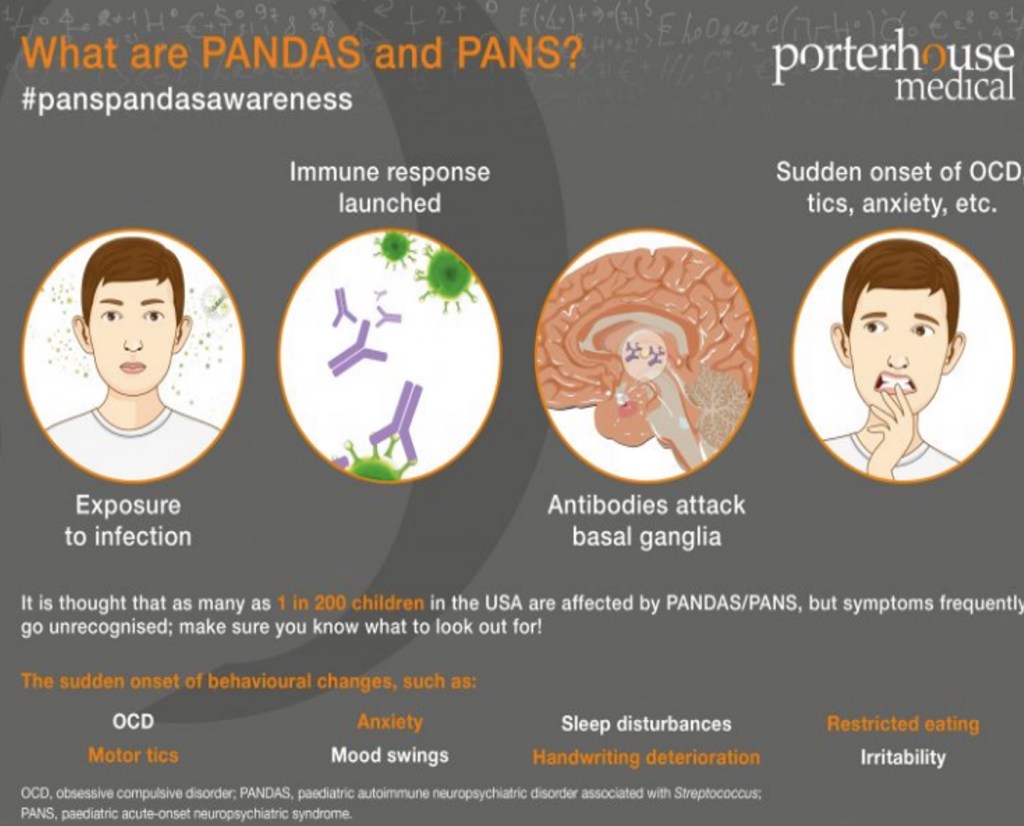
In some children with autism there may be a sudden onset of Obsessive-Compulsive Disorder or an eating disorders. The scientific name for this is pediatric acute-onset neuropsychiatric syndrome and is usually shortened to PANS. There is a subtype of this called PANDAS, but this is where the cause has been identified as an exposure to a strep infection. While PANS/PANDAS is most frequently found in children without autism, it also can affect these children. The problem is heightened as it can be especially challenging to diagnose in a child with Autism  because many of the symptoms overlap.

To illustrate the extent of Pans/Panda Between 1 and 3% of youths  have OCD. Among these  with OCD, up to 5% may meet the criteria for PANS/PANDAS. Strangely whilst OCD is commonly associated with Autism (around 17%) there is no link between this and PANS/PANDAS as there is with the generic child population. 

What defines PANS/PANDAS is a sudden occurrence of OCD or Anorexia, howeverIt must be combined With the onset of at least two of seven signs:

  1. Anxiety
  2. Behavioral developmental regression
  3. Emotional liability or depression
  4. Irritability aggression or severally oppositional behavior
  5. Deterioration in school performance
  6. Sensory or motor abnormalities
  7. Somatic signs/symptoms, especially insomnia and urinary symptoms

PANDAS is more easily diagnosed as it is form of autoimmune encephalitis (inflammation of the brain), characterized by neuroinflammation. It is diagnosed only when these symptoms occur which cannot be contributed to other neurologic or medical disorders such as Tourette Syndrome, Lupus, Steroid responsive encephalitis, Multiple sclerosis, Guillain Barre syndrome, A different form of Autoimmune encephalitis and Other disorders.

Diagnosis can begin to occur between the ages of 3 and 12, however it is usually later and on average age of onset is between 7 and 8 years old. It is a condition that affects all socio-demographic groups equally. However there is a link with families who have a history of OCD or rheumatic fever. 

Children with PANS/PANDAS nearly always suffer from cormorbidities (multiple concurrent symptoms. These include:

  • Sleep disorders (80%)
  • Behavioral regression (98%)
  • Inability to concentrate (90%)
  • Handwriting deterioration (90%)
  • Urinary frequency, urgency, enuresis (90%)
  • Hallucinations (10%)
  • Eating disorders (20%)
  • Other comorbidities include short-term memory loss, hyperactivity, aggressiveness 

Before diagnosing PANDAS, a doctor will most likely order laboratory testing, EEG and MRI scans, or a sleep study. It is common to require a detailed family history (paying special attention to genetic factors and exposure to strep), perform a physical examination, asses involuntary movement and pupil dilation. They may also take a throat culture to identify the presence of a strep infection. It is important to note  PANDAS will only be diagnosed if the symptoms cannot be explained by another disorder. Everything else should be ruled out first. For this reason a diagnosis can be slow. 

There is usually a three prong treatment for PANS/PANDAS:

1. Treat and prevent infection: If the affected child has a bacterial infection, treating this infection can reduce symptoms which in turn improve outcomes, this is especially effective especially the first weeks or months of illness. Often, they may be prescribed 3 to 4 weeks of narrow-spectrum antibiotics.

2. Address immune system dysfunction: Immunomodulatory therapies to address immune system dysfunction. These can include NSAID’s Oral or IV steroids, intravenous immunoglobulin (IVIG), therapeutic plasmapheresis (replacement of blood plasma), and others indicated by severity. These are only useful in conjunction with infection treatment and psychiatric and behavioral interventions.

3. Applying Behavioral and Psychiatric Interventions: Behavioral and psychiatric Interventions may include SSRI’s Anxiolytics, Soporifics, other typical psychiatric medications, and cognitive behavior therapy. 

Parents can receive supportive therapy to help understand of illness and treatment. Getting parents into CBT even before the child is ready can be very helpful. If you suspect your child may have PANS or PANDAS, consult your doctor.

In very rare cases, a child with autism may also qualify for a diagnosis of PANS/PANDAS. 
https://www.liebertpub.com/doi/full/10.1089/cap.2014.0084
https://www.ncbi.nlm.nih.gov/pmc/articles/PMC6045800/

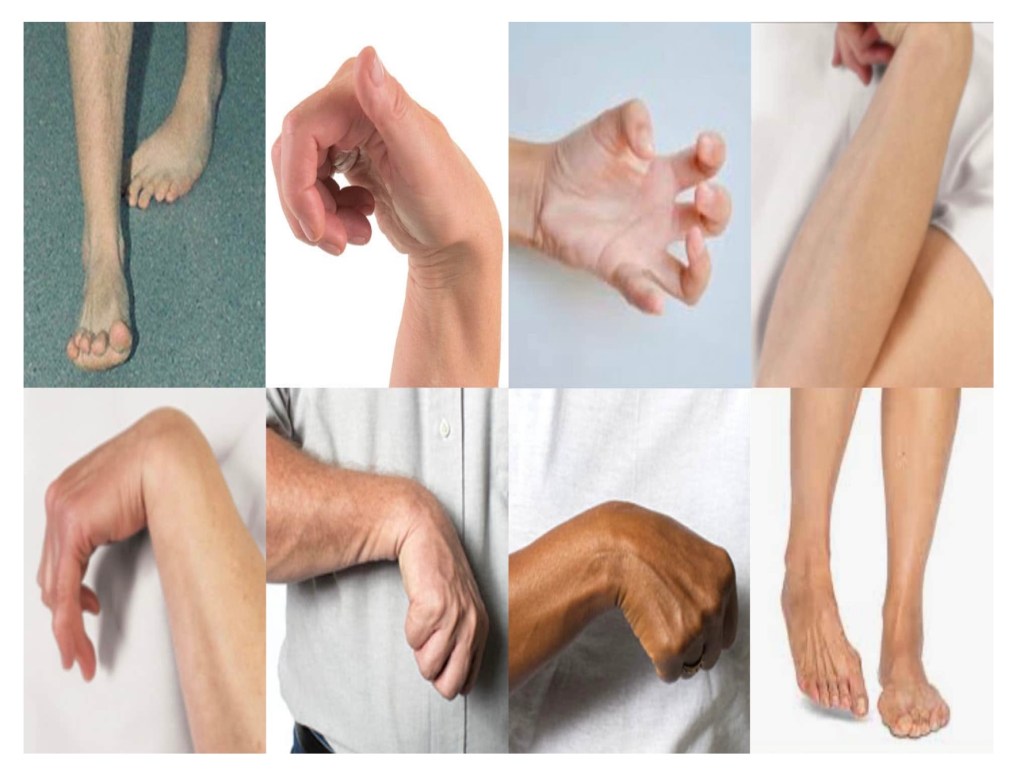
Autoimmune encephalitis (AE) and Autism

Image Credit: Thinking Autism, shows various AE symptoms such as tightened hands and turned in feet

AE is a type of brain inflammation in which the body’s own immune system goes on the attack, damaging healthy cells and tissues in the brain or spinal cord. It is rare but is a very complex disease that causes rapid changes in both physical and mental health. It can be a cause of Autism.

Treatments for AE can include immunotherapies such as steroids and  intravenous immunoglobulin (IVIG) and medication Rituximab.  Another option is plasmapheresis, a process in which the liquid part of the blood, or plasma, is separated from the blood cells. Usually this is replaced with an alternative solution such as saline or albumin, or the plasma is treated before being returned to your body.    

Interestingly, many of these treatments have also been shown to reduce the core symptoms of autism, even without diagnosis of AE. A recent study looking at 40 children with autism, carried out by Rocha-Brito and colleagues, showed the steroid  prednisone was effective in the  treatment for improving social communication and language impairments in these children. Similarly, several small scale trials, like the one by Melamed and colleagues, have demonstrated that IVIG treatment can be effective at reducing core symptoms of autism in a subgroup of children.

AE as a condition appears differently in children in comparison to adults. Usually In teenagers and adults the symptoms are of a psychiatric nature, such as psychosis, delusions and hallucinations, whilst these often don’t occur in children. AE in adults is normally associated with a tumour, however this is rare in children with AE.

However, movement disorders and seizures are significantly more common in children, alongside irritability, anxiety and constant crying. In many cases you may notice a loss of eye contact and interest in surroundings. A symptom to look out for in very young children/toddlers is movement and gait abnormalities – unsteady walking and loss of balance, as there can lead to early diagnosis.

It is important to remember not all people with AE will be Autistic and not everyone who is Autistic will have AE. Autism is a spectrum each child may have different needs or conditions. No person is the same. 

https://www.sciencedirect.com/science/article/abs/pii/S0278584620303444

https://link.springer.com/article/10.1007%2Fs10803-006-0353-1

Mitochondrial issues and Autism

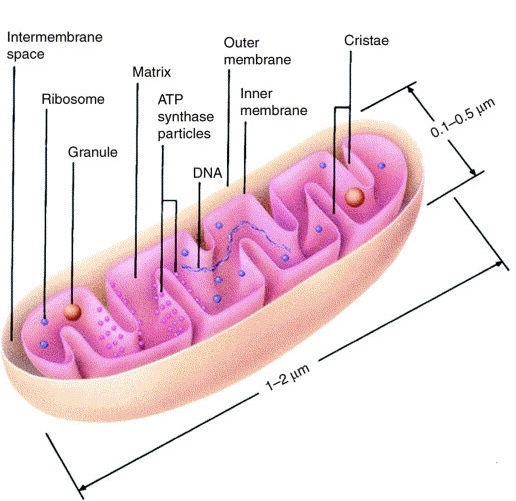
Mitocondria are the part of animals cells that provide usable energy in the form of adenosine triphosphate to the body. Without these mitochondria the human body would have no supply of energy and would therefore fail. A single cell can have up to several thousand mitochondria. The brain and muscle are areas that require a lot of energy, so have a high density of mitochondria to support these needs. Therefore when mitochondria aren’t functioning properly, these parts of the body are often the most affected. This can lead to a wide variety of symptoms, including: Developmental delay or regression, Language impairment, Social impairment, Intellectual disability, Neuropsychiatric symptoms (ADHD, anxiety, OCD, depression), Seizures, Headaches, Hearing impairment, Weakness, Small stature, Fatigue, Gastrointestinal symptoms, Endocrine disturbanceand many others. 

More and more research now suggests that mitochondrial dysfunction may be important in many different health condition including Autism, Bipolar disorder, Schizophrenia, Depression, Diabetes, Asthma, Chronic fatigue syndrome, Alzheimer’s disease, A variety of gastrointestinal disorders And many more. 

This piece focuses on the effect of mitochondrial disorder on Autism Spectrum Disorder.

In 2010, a groundbreaking study by researchers at University of California Davis showed that 80% of the children with ASD enrolled in their study had blood tests indicating mitochondrial dysfunction. Other research studies have found evidence of mitochondrial dysfunction in post-mortem brain tissue of those with ASD, Markers of mitochondrial dysfunction on brain scans and Mitochondrial and immune abnormalities in children with ASD 

Overall evidence suggests that mitochondrial dysfunction occurs in a large proportion of those with ASD.

Triggers of Mitochondrial Dysfunction in Autism

Triggers that can lead to mitochondrial dysfunction, can either be genetic, environmental, or a combination of both. Some of the triggers include gene mutations, shortages of key vitamins and minerals in the diet, certain chemicals, heavy metals, drugs, certain bacteria and viruses and stress. 

Mitochondrial dysfunction can therefore, in part, explain how different environments might lead to the symptoms of ASD. One common theory is that those with ASD may be more sensitive to their environment because they already have an underlying genetic vulnerability. 

Diagnosis of Mitochondrial Dysfunction in Autism

There are many different tests that can be conducted, however the most common  are:

  • Blood testing – To access the metabolic profile of lactate, pyruvate, amino acids, creatine kinase, ammonia, total and free carnitine and acylcarnitine.
  • Urine testing – looking for acids
  • Brain imaging – using magnetic resonance spectroscopy (MRS) may show elevated lactate (which is a biomarker of mitochondrial dysfunction. 
  • Genetic testing – To access the individuals likelihood of being affected.

It is important to note that these tests have a low sensitivity meaning results can often show as negative even if a problem occurs. For this reason it is often wise to test multiple times to see if a pattern emerges.

There are a few indicators that may suggest somebody is more prone to mitochondrial dysfunction such as:

  • Developmental plateau or regression, especially in the setting of illness or other physiological stress
  • Symptoms in more than one organ system
  • Family members with diseases that have been linked to mitochondrial dysfunction

Treatment

Some non-medicinal approaches can help support mitochondrial function and thus are often recommended by physicians. Some of this include changes to diet such as fasting or more frequent meals, better hydration,Avoiding toxins (e.g., Valproic acid, certain cholesterol-lowering medications etc.), avoiding bodily stresses like temperature extremes, good nutrition and vitamin intake as well as consistent moderate exercise.

The following are supplements that can also be taken but should be done do under the advice of a medical professional, it usually best to take a combination of many of these:

  • L-carnitine – Helps transport fatty acids into the mitochondria so they can be used to produce energy. 
  • Coenzyme Q10 – An antioxidant that is a key participant in the mitochondrial respiratory chain.
  • Magnesium – Supports Muscle, nerve function as well as the production of energy.
  • Vitamin C – Helps to counter the damaging effects of free radicals on cellular and mitochondrial function.
  • VitaminD3 – Helps enhance mitochondrial function.
  • Vitamin E – A potent antioxidant that helps to protect cells from the damaging effects of free radicals.
  • Vitamin B1 (thiamine) – Vitamin B1 is involved in numerous metabolic processes and a deficiency can cause severe neurological symptoms including delirium, neuropathy, and sleep disturbance.
  • Vitamin B2 (riboflavin) –  Essential to many enzymatic reactions that take place in the mitochondria. 
  • Vitamin B3 (niacin or niacinamide) –  Deficiency can lead to symptoms such as nausea, anemia, headaches, and fatigue.
  • Vitamin B5 (pantothenate) –  Important in the synthesis and oxidation of fatty acids and in the Krebs cycle (which produces energy).
  • Vitamin B7 (biotin) – Necessary for cell growth and the metabolism of fats and amino acids.
  • Vitamin B9 (folate) – Folate is important in the synthesis, repair, and methylation of DNA and is a cofactor in many biological reactions. 
  • Vitamin B12 (cobalamin) – Vitamin B12 plays an important role in DNA synthesis and regulation as well as fatty acid metabolism and amino acid metabolism.
  • L-Creatine – Facilitates the formation of adenosine triophosphate (ATP) and thereby helps to supply energy to all of the cells of the body, and in particular to muscle. 
  • Alpha Lipoic Acid – Important in many different aspects of aerobic metabolism including the Krebs cycle.
  • L-Arginine – Important for cell division, wound healing, detoxification, immune function, and hormone release.
  • Selenium – Necessary for cellular function and a component of several antioxidant enzymes.

It is important to tailor these to the individual and therefore a medical professional should be involved. Getting the correct treatment and doses is vital as if done incorrectly it can have adverse effects.  Remember that Autism is a wide spectrum and everyone’s needs are individual. There is not one medication that helps ever. Some medications may help one person but not help another. Overall it is recommended that people with concerns seek to get tested and the correct treatment for the condition can be applied.

One product that has been designed by scientists to help those with ASD is Spectrum Needs. It has been formulated to counteract the effects of mitochondrial dysfunction. It is a good starting point for people who suspect they or someone they are close to could benefit. It is available at https://www.neuroneeds.com/

[1]

[2]

https://www.tandfonline.com/doi/full/10.3402/mehd.v26.27458%40zmeh20.2015.26.issue-s1

[3]

https://journals.sagepub.com/doi/abs/10.7453/gahmj.2013.089

[4]

https://www.sciencedirect.com/science/article/abs/pii/S0959438817300764

The Relationship between Folate and Autism

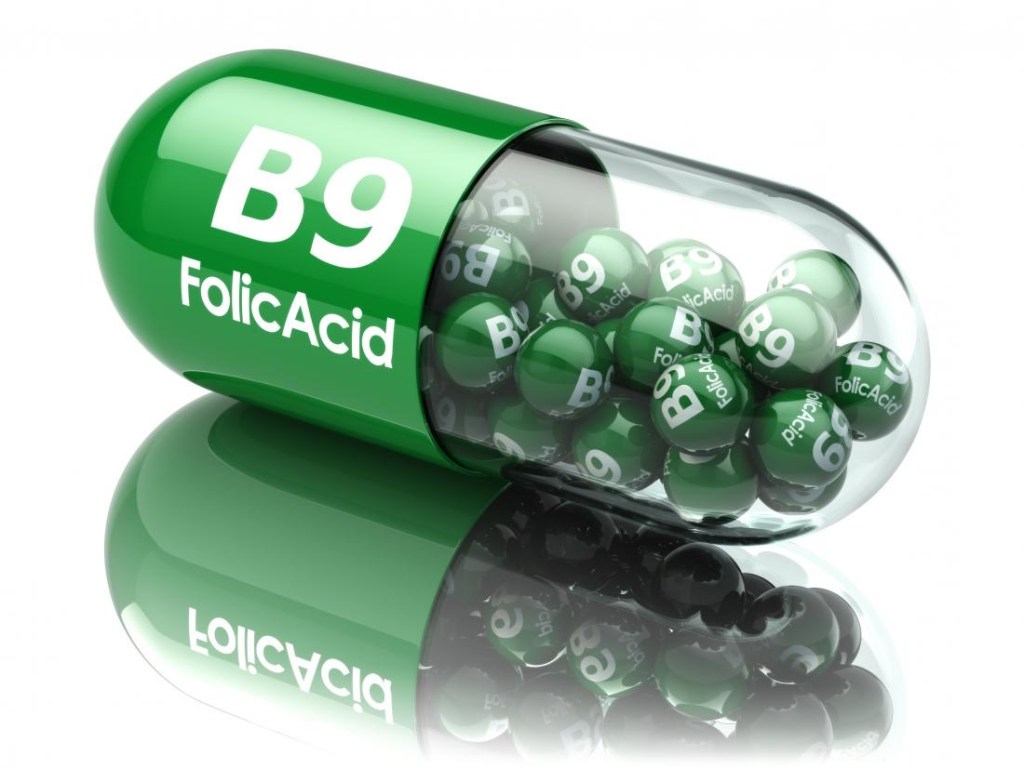
Shows a green tablet saying B9 Folic Acid and filled with little balls with the same written on them

Folate, also known as vitamin B9, is an essential nutrient needed for synthesis of brain neurotransmitters, Serotonin, Dopamine and Norepinephrine. Due to its importance, a deficiency in Folate is associated with depression, Attention Deficit Disorder (ADD) and other neuropsychiatric disorders. On top of this, folate imbalance can cause blood clots and an increased risk of cancer.

It has been shown that people with autism have reduced folate. This affects many aspects including DNA,RNA synthesis and cell replication, synthesis of neurotransmitters which all effects brain development. It has even shown to affect developing babies in their mothers womb with a direct correlation between a mother with reduced folate and the likelihood of the child being autistic. 

The theory behind the link between folate and autism surrounds the folate receptors. Folate in itself cannot enter the brain, it must attach to folate Receptors in the Choroid Plexus, which turn it into the active form 5MTHF (5-Metha-Tetra-Hydro-Folate). This can then cross the blood brain barrier, where it enters the brain and promotes neurotransmitter production. 

Unfortunately in those with Autism, often these receptors do not function due to certain antibodies. It is a form of auto-immune disease in which an immune response is directed at the receptors. This stops the folate from being able to enter the brain. It as been found that 75% of autistic people have these antibodies that prevent the receptors from working. For this reason treating these children with ordinary folic acid will be of no benefit

There has however been success found in using Leucovorin, Devlin & Levofolinate. These chemicals are  classed as activated folate vitamins meaning they come in a form that can already cross the blood brain barrier, which in turn makes it accessible for these people. It has been found a third of autistic children with this treatment were ‘moderately’ to ‘much improved’ in verbal communication, receptive and expressive language, attention and stereotypical behaviour.

Another possible issue is MTHFR mutation. This is similar but it is a genetic mutation that prevents folate converting to 5MTMH (the active form). It reduces efficiency by up to 70%. This is also associated with Autism, ADD and other neuropsychiatric disorders. Again a treatment of an activated folate should help. Often however these patients are misdiagnosed and treated with a poly-drug approach such as Ritalin, Adderal, Anti-depressants and anti-psychotics. None of these will address the folate conversion problem. It will in effect, treat the symptoms not the cause, which is often ineffective. The sad thing is, the correct treatment of activated folate can in fact be found over the counter easily. It is possible to get tested for this mutation either by a lab or using a home test kit, ordered online (google MTHFR mutation test, there are lots available).

These findings are a breakthrough moment as they offer an easy and affordable form of treatment for autism that is effective for many people. It has also been found that combining these treatments alongside a steroid, dexamethasone, which helps reduce brain inflammation, has shown very positive results.

It’s also worth noting the importance of folate during pregnancy. As discussed earlier having low folate during pregnancy can cause many developmental issues. It is therefore vital pregnant women ensure they have the required quantity of folate in their system. This could be achieved through supplements however it is also available via dietary means. Food such as leafy greens, citrus and beans are high in folate, whilst you can also buy folate fortified products such as cereals, pasta and bread. It is worth noting that some pregnant women can also suffer from antibodies blocking the receptors. In these instances treatment with an active form of folate is required to ensure a healthy mother and child.

It is important to discuss any treatment with a medical professional in order to ascertain the correct compound and dosage, as too much folate can be dangerous.

https://n.neurology.org/content/64/6/1088.short

https://www.nejm.org/doi/full/10.1056/nejmoa043160

https://www.ncbi.nlm.nih.gov/pmc/articles/PMC3578948/

https://www.ncbi.nlm.nih.gov/pubmed/18461502

Jacobs Story

My brother Jacob was born a healthy baby weighing in at 10 pounds. At first there were no obvious signs he had autism,  he started walking and would reply every time we would ask him a question he would reply “ada”. Whilst my opinion is controversial, and I’m not denying there are probably other aspects to why he has his Autism and ADHD, but he didn’t do well after having the MMR vaccine.  I remember hearing about his diagnosis when I was 13, I was sat on the stairs confused and sad. The doctor who first diagnosed him was rude, mean and painted a bleak life for Jacob. At the time he had developed a phase of lining objects up and doctor stared at him as if he was an animal. My mum rightfully stormed out. 

Jacob was so behind in his education and unfortunately remains so. The mainstream primary school kept pushing him into a special needs school which was horrid in itself. After his diagnosis he didn’t speak at all and had a lot of energy to burn meaning he was easily distracted. Now Jacob will say the odd word and is more aware then before, but there is a long way to go, and his education feels substandard to help him improve. 

We encourage him to do activities such as swimming and horse riding. Its important keep pushing your child with a disability and don’t give up on them. In reality not many people will support them therefore it is up to us parents, siblings and friends to support them. 

CBD for Autism

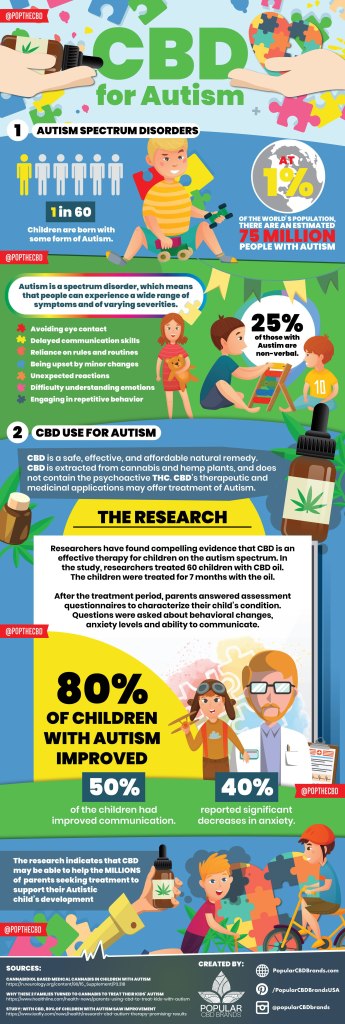
CBD is getting a lot of traction as a therapy for many ailments but often People get nervous at the thought of anything related to cannabis. There is however a quite difference between cannabidiol (CBD) oil and marijuana (either illegal or medical). CBD is just one of many substances that contains medicinal properties within the cannabis plant, and is therefore a derivative of the plant. When CBD oil is produced, it is extracted and mixed with a carrier such as coconut oil. CBD oil is legal in the United States and Europe as it contains less than 0.3 percent of the psychoactive element in the cannabis plant, known as tetrahydrocannabinol (THC). This means you can gain the benefits from the CBD without getting ‘high’. It also avoids the worrying possible psychosis that is linked to the THC element. For this reason CBD is far safer then marijuana and available to buy as a supplement.

Many scientific studies are underway, but so far families report CBD oils have been able to stress for people on the autism spectrum. On top of this it appears to lessen aggression, self-injurious behaviors, as well as anxiety. Recent reports have indicated CBD can even aid children with co-occurring seizures. 

There are some possible but rare side effects including Nausea, Vomiting, Lightheadedness, Low blood pressure, Diarrhea, Dry mouth and in even rarer instances anxiety and depression or psychosis (although these are far more linked to THC not CBD). These side effect are worth being aware of and monitored if it is to be used. however in general considering the rarity of the side effects and the possible benefits, CBD seems like a treatment that is worth trying, if you do your research.

https://health.usnews.com/conditions/mental-health/autism/articles/cbd-oil-for-autism

https://journals.sagepub.com/doi/full/10.1177/0269881119858306

https://popularcbdbrands.com/can-cbd-help-with-autism/

Tui-na for Autism

image shows various moves that can make up a Tui-na session

Tui-na (pronounced twee-nah) massage is an ancient therapy originating from China.  It is one of the four main branches of traditional Chinese medicine, along with acupuncture, qi gong, and Chinese herbal medicine.

When used as a therapy with someone with autism it offers a source of relaxation, helps reduce stress and can positively impact behaviour. With regular massage comes many benefits, but overall seems to have a calming affect that helps the person achieve more positive outcomes. This relaxation has been shown to increase concentration and attentiveness, such as in children with reading and focus problems being able to study and read, as well as even do tests without much issue.

The importance of relaxation for those affected by autism is imperative. It is also not only the person with autism, but those who are affected by that person that can benefit. If those who are around the person with Autism are more relaxed and cantered it can help build better relationships all round. Tui-na is an extremely valuable tool to gain this relaxed and calm state. 

I have experienced these benefits personally with my Autistic brother Jacob. During and after the massage he gets more relaxed, less tense and his behaviour improves. Also as I give him the massage I also find myself relaxing too. The other benefit is that the physical touch between us helps me bond with Jacob and allows me to gain his trust. I highly recommend searching for tui-na and applying the techniques.You can refer to the picture as a useful starting place.

https://www.bluewhitehealth.com/news/tui-na-massage-for-children-with-autism?fbclid=IwAR1a5kjBi5Rs1ZjJKnO9pNmdVPONYG3mvz6dVVEdK7au-Ho8rctZrWILNuI

https://www.sciencedirect.com/science/article/abs/pii/S1360859203000445

https://www.hindawi.com/journals/ecam/2019/1282085/

Trampolining therapy for Autism

Trampolining is a useful therapy for autism provides an aerobic activity which  gives them a way to exercise and burn in a non-threatening manner where all movements can be performed at their own pace.

In addition to this trampolining helps build muscle tone and improve coordination. Trampoline therapy has been shown to reduce stereotypic behaviors in kids with autism and enhance their attention.

Trampolining is also great as it can be an individual activity thar is performed in a group setting. This means it allows for parallel play (where kids are adjacent to each other but do not try to influence one another’s behavior), which is often preferred by kids with autism. This parallel play allows kids and adults with autism to take part in physical activity with others, without any stresses of competition, free of complicated rules, all the while avoiding direct contact with other individuals.

trampolines can also provide help improve educational attention as well as sensory organization and centering, according to an article in the National Library of Medicine, 

My brother Jacob (with Autism) loves the feel of bouncing on a trampoline, he will say “ trampoline” and loves to listen to music while bouncing on it. You can ask local trampoline places if they do an Autism trampolining session, with most trampoline centers offering this service. 

https://launchtrampolinepark.com/fitness/benefits-of-a-trampoline-exercise-class-for-kids-adults

Music therapy for Autism

Autism Spectrum Disorder (ASD) is a general term for a group of complex brain disorders. These disorders are characterized, with varying degrees, by difficulties in social interaction, verbal and non verbal communication and repetitive behaviours.

Music as a therapy has been shown to very beneficial to sufferers of ASD. There is a strong link between musical processing strength and autism so stimulation in this way can lead to improvements in the condition.

Singing can be a pathway to promote early speech development by allowing children to access new neurological pathways, which in turn can compensate for communication deficits. On top of this music, at its core, is a structured way to present information.  It has Melodic and rhythmic patterns which allow students with autism to organize auditory information and help memorize scripts, task sequences, and academic facts.

Music can also be helpful to  individuals with autism in that it can allow social and family connections developed through a mutual shared interest. Whilst it is also a creative medium that can offer a motivating and safe way to explore more flexibility and spontaneity, which can break negative repetitive behaviours.

My brother Jacob becomes vocal in his choice in music and when he is listening, which is not usually the case. He likes playing music on the mobile, Ipad and Nintendo DS which he will put near to his ear. In the car he will say Rhianna and track number 1 because he likes the song Umbrella and this is the first track on the album, for someone non verbal this feels like a breakthrough. He loves dancing and having a go at instruments. He especially enjoys plucking my violin or pressing the keys on the piano. Also when we would go on holiday he would enjoy the dance clubs where we  dance and listen to music. All of these activities help him come out of his shell.

https://academic.oup.com/cercor/article/21/12/2838/299898

https://journals.sagepub.com/doi/abs/10.1177/875512339901800103

https://www.semanticscholar.org/paper/Music-Therapy-for-the-Autistic-Child-Alvin/b7c9f702b966394c847d61810f07bbad091231f0?p2df

Ice- skating and Rollerblading as a therapeutic for Autism

Ice or roller-skating is a good choice of activity for people with Autism. It has benefits beyond fitness. One thing it has been noted for is that it provides vestibular input (the sensation that occurs from a change in position, direction, or movement of the head. There are  receptors are located in the inner ear which are activated by the fluid in the ear canals moving as you move). People who have difficulties with this input (which includes autistic people) suffer with low muscle tone, fatigue/lethargy or persistent sitting, resistance to movement, clumsiness, rocking, twirling, pacing, bolting (running away) and head banging, shaking, or hitting. Activities like ice skating and roller blading help improve all these aspects.

On top of this people who ice skate or rollerblade have shown to have Improvements found in balance, motor behavior (every kind of movement from involuntary twitches to goal-directed actions, in every part of the body from head to toe), functional capacity (ability of a person to perform aerobic work during maximum oxygen intake) and strength.

Therapeutic skating may also offer a viable, inexpensive community-based alternative to other forms of physical activity, which can often be costly and difficult to access.

When looking to take part, a lot of centers offer Autism only Ice-skating/roller blading specific times, just ask your local ice-skating ring/roller blading centre. Once confidence has been gained, roller blading can be done nearly everywhere, making it affordable.

My brother Jacob loves both activities, he enjoys the speed and it is good exercise for him. It helps his balance as well allowing us to bond. As well as this he enjoys the music that the rinks often play to go along with, which also helps him in a sensory manner.

https://journals.lww.com/pedpt/fulltext/2015/27020/commentary_on__a_therapeutic_skating_intervention.18.aspx

https://pubmed.ncbi.nlm.nih.gov/25822357/