Swimming and Autism

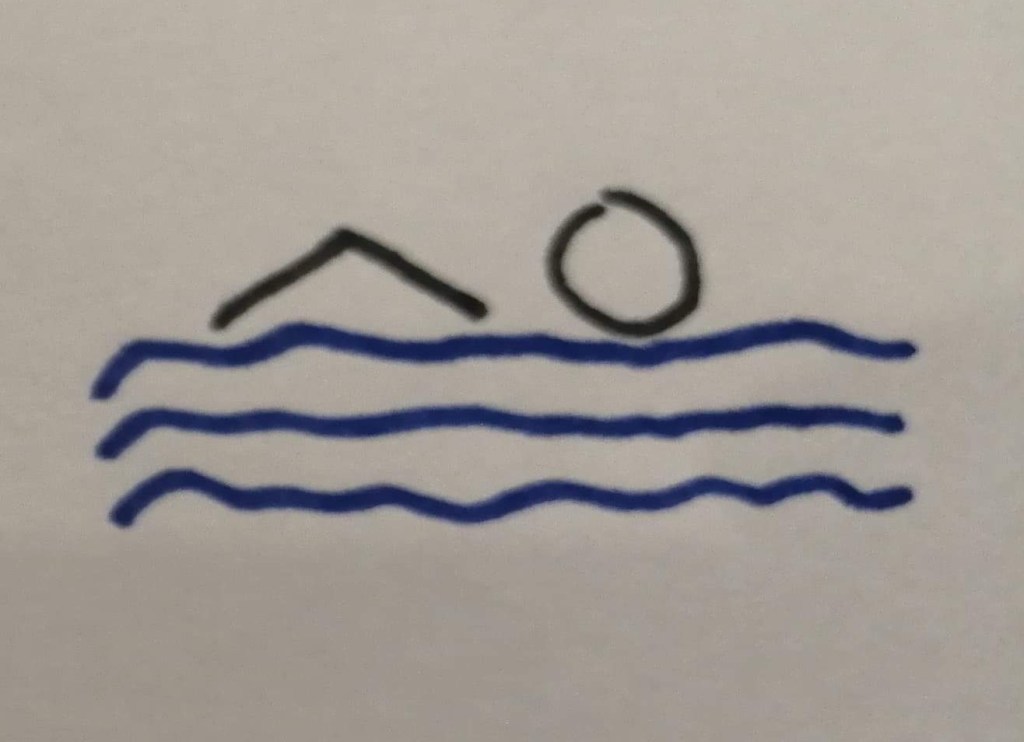
Swimming is an extremely good therapy for children and adults  with autism. On top of this it is a unique social outlet. Amongst many advantages [1] Swimming can help someone with Autism improve their coordination, social skills, speech, self esteem and cognition.

Swimming and water therapy are recently emerging areas of research looking into the benefits for people living with Autism Spectrum Disorder (ASD). So far studies suggest that swimming should no longer be viewed as simply a way of retaining technique and fitness, and instead we should appreciate its therapeutic benefits. A study conducted by  [2] Chien- Yu Pan (2010), evaluated that students saw improvements in their social and communication skills over a 10 week period of once weekly, 45 minute swim sessions. 

It would seem that water provides several needs of a person with autism, that allows them to gain from therapy. Water reduces body weight by 90%, in turn lowering  stress on the body during therapeutic exercises[3]. The warmth of the water helps relax tight muscles, which is especially helpful as autistic people often deal with spasticity and tension due to anxiety. On top of this the energy needed to move through the water The energy required to move against the force of water tends to use up excess energy, which increases attention and focus’s for other daily activities. 

Emerging research is highlighting how water therapy can improve a person’s capacity to perform daily living tasks in the home, and beyond [4]. Unfortunately results may differ as each child is individual, however most people will see some benefit from swimming. It will be fascinating to see how research develops in the future, but you can already see the benefits just from observing people with Autism swimming.

With my brother Jacob it  took 10 years to get him to swim. At first he would fidget, not focus, and it was difficult to find to swim teachers that were patient with him. My mother and I remember thinking It would be great to see him swim a length of the pool. Now he is 13 and has 1 to 1 sessions with an instructor, and he has much improved. Whilst he can be cheeky, he now swims with no floats . Whilst he still has his disability, which is part of him he is much better and confident. It makes me so happy to see him swim, it makes my day and I am so proud of him. Swimming is so important as it is one of the key skills in life that everyone should have, and at the end of the day can help people if they do ever end up in the scary situation of falling into water.

From my experience with getting Jacob to swim, you have to just keep persisting with helping  your disabled child and not give up . Eventually something will click in their heads and they will start doing an activity that people take for granted. It is so rewarding to see when it happens and makes them one step closer to independence. I would suggest asking for 1 to 1 sessions and having a teacher who pushes your disabled child/adult and is aware of their disability as well as their needs.

https://autismswim.com.au/2017/03/17/benefits-swimming-beyond-pool/

https://journals.sagepub.com/doi/abs/10.1177/1362361309339496

3 https://d1wqtxts1xzle7.cloudfront.net/40727954/2004_Fhysical_Fitness_Pediatrics_Int.pdf?1449833536=&response-content-disposition=inline%3B+filename%3DEffects_of_swimming_training_on_physical.pdf&Expires=1602961262&Signature=Pyh5gpMtld1t4E9qow4FekQ~SRVprukYjAW8OG1C5fOuBkQqEcfIClDCn73nHhEFu8orUnEHRhavOeg7xUbkh1W~tgzGHtolsfAteJFz3xbVJvoQpJf44jU3k21On-Z0MGxH6bYMPOexd6L8AahVYbzjSkoGGftA02y7pYL3zHTv~cPoa5oDPqvzRIf-FWNkabF2Xg67utbA8f8i0OIPUhxZKgIjOx7jknptU1zpM-5AYSF4HoGCJJRgjJolenKIby7EA4Ojq0e0yjPATABARAfTsm8XQrQTwlmxWzm5jlMzlth3W545adRa7n2XELtcWn5JHJBdZWdqg3GAncNy0A__&Key-Pair-Id=APKAJLOHF5GGSLRBV4ZA

4 https://journals.sagepub.com/doi/abs/10.1177/0271121410369708
Why I chose my homepage photo

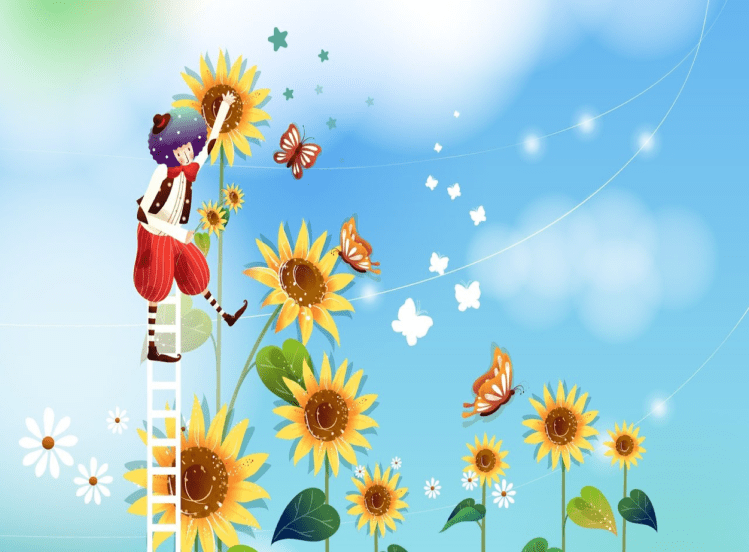
the photo on my homepage

I chose this picture because to me it represents happiness and gives me a “warm fuzzy feeling”. Also, to me it indicates anyone can grow and that we should embrace being different, after all “variety is the spice of life”. I look at it and it reminds me we should love and cherish everything. I feel Autism would be a sunflower, even though it is this Autoimmune disability there is hope and if you give it enough care you see this excitable vibrant character who will grow into a “beautiful butterfly”. I am firm believer of children with disabilities are gifts from God, Jacob my brother is my precious present. He brings joy, is cheeky, determined, smart and very caring which people underestimate; there is an ignorance about his intellect. This picture just reminds me of him so much, I hope I can encourage him to be the best he can. So many people don’t want to support people with disabilities especially learning difficulties, they have so much potential especially my brother. It is growing these sunflowers that I aim to achieve with my blog.

Horse Riding for the Disabled

Horse riding is a great activity for disabled people especially as it is non-weight-bearing which means can be accessed by many different people. Disabilities that can benefit include riders with Autism spectrum disorder, Cerebral Palsy, Cerebral Palsy, Vascular accident, development delay, Down’s syndrome, learning or language disabilities, Multiple Sclerosis and injuries resulting from an accident [1].

There physical benefits from riding are numerous. It firstly helps strengthen an individual’s core stability, which in turn can reduce spasms and allow better balance, posture and coordination. On top of this the sensory nature of the heat and the movement of the horse are sent through the rider’s body, which can often make them more relaxed. It is well reported the activity can help people retain their mobility for longer. It is often recommended as an activity by medical professionals, including physios and OTs.

A riding session may contain stretches and exercises, plus riding school movements (straight lines, circles, serpentines) and changes of pace (usually halt, walk and trot), this all depends upon the individual and what level they are at as well as what benefits they can derive.

It isn’t just about the physical aspect, there are also recreational and psychological benefits . These include freedom of movement, increased confidence and self-esteem, taking control, decision making, building relationships and improving communication skills

One often ignored aspect is that students get to experience an element of risk. This is a key part of life to learn yet is often denied to disabled people. Taking this measured risk, in a trained environment can create aa sense of achievement that may be impossible elsewhere. 

At the end of the day, not only are the benefits so great, but it is also fun. Not just for the students but for the trained staff, volunteers and families who get to see the student blossom.

My brother with non-verbal Autism rides at an RDA registered centre called Woodside stables. They have made him far more confident (he used to be scared of the horse but now jumps straight on), developed his communication, improved his physique as well as marking him relax. Please consider done orating to the stables, who are struggling for funding during Covid 19 [2].

More about the stables and local donation giving page.

link

https://localgiving.org/charity/woodsidefarmstablesrda/

The stables prefer direct payment as they get to keep full amount

Barclays Bank plc

Sort Code:20-55-62

Account number: 50987549

Account: Woodside Farm Stables Riding for the Disabled 

  1. García-Gómez, Andrés, et al. “Effects of a Program of Adapted Therapeutic Horse-riding in a Group of Autism Spectrum Disorder Children.” Electronic Journal of Research in Educational Psychology (2014).
  2. https://link.springer.com/article/10.1007%2Fs10803-013-1773-3

Scientific Foundations of Autism

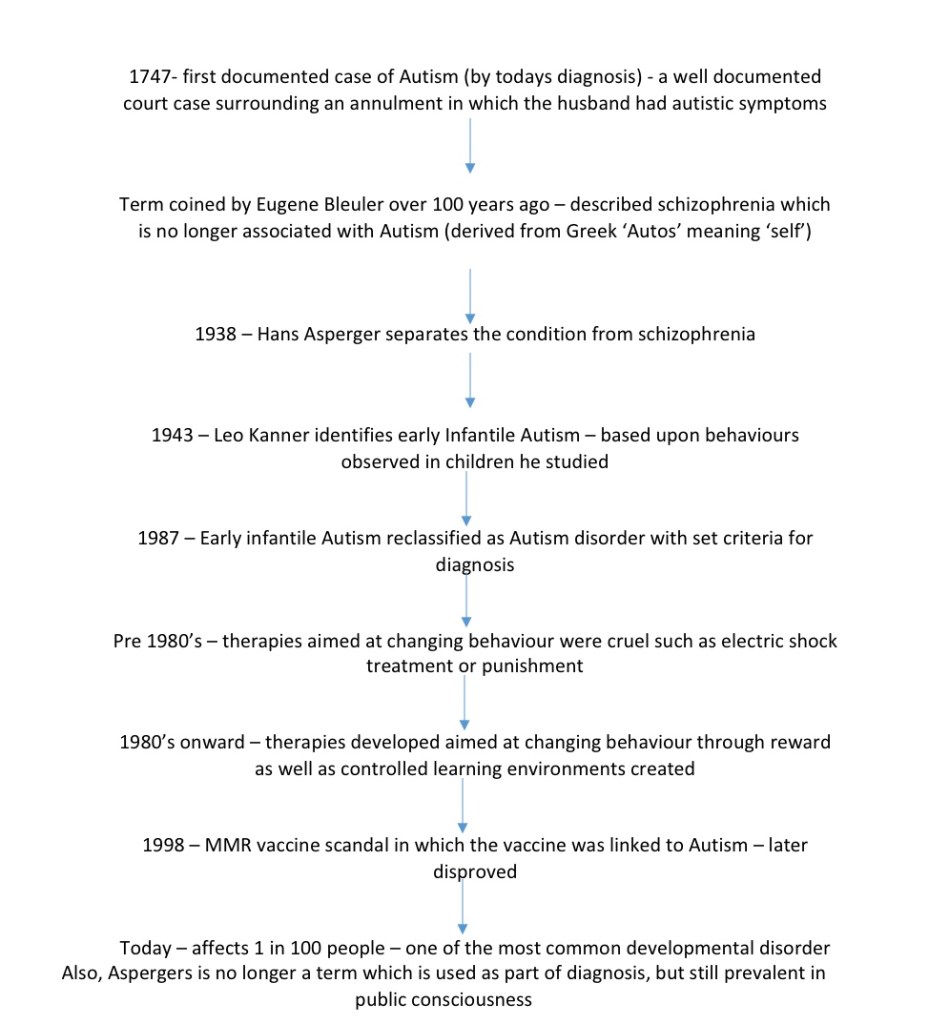
Autism is a developmental disability that lasts for life, and alters how a person communicates relates to people, it affects the individuals experience of the world around them. There are many different levels of Autism for which various support is needed, and is therefore a spectrum condition[1]. Autism as a term has been in use for just over 100 years [2], with the history of the condition being shown if the figure 1 below.

Fig1. Timeline of key history events in Autism [3]; [4];[5];[6];[7];[8];[9]

There are around 100 known genes that increase the risk of Autism, with some able to cause the condition on their own [10].   For example, there is a strong association between denova copy number mutations and autism.  Also, studies show there are  mutations in single genes whilst affected genomic regions are extremely heterogeneous (diverse  in character or content) [11]

Furthermore, [12] it has been shown how in mice neuroligin 3 mutation causes impaired social interactions but improved spatial learning. Furthermore, there was an alteration in the inhibitory/excitatory balance that alter oscillatory rhythms in brain. Autism  has also been explored through neurophysiology  (concerned with the study of the functioning of the nervous system) enhancing the understanding of brain-impairment in multiple regions [13]. It has been concluded that most autistic people have impairments of the frontal lobe leading to variability in language and memory abilities. Moreover, [14] there is evidence that environmental factors also contribute.  These could be due to many factors including maternal and paternal reproductive history, diet, illnesses, and medications during pregnancy, pesticide use, and the child’s early life exposures.

https://www.autism.org.uk/advice-and-guidance/what-is-autism

https://journals.sagepub.com/doi/full/10.1177/0952695113484320

https://search.proquest.com/docview/1883578864?pq-origsite=gscholar&fromopenview=true

https://journals.sagepub.com/doi/full/10.1177/0952695113484320

https://pdfs.semanticscholar.org/ce87/8c9cee3d1ba5113111f8cdd0ff2db15a6805.pdf

https://link.springer.com/article/10.1007/BF01537624

https://harkla.co/blogs/special-needs/history-of-autism

https://www.researchgate.net/publication/222158258_An_in-depth_examination_of_optimal_outcome_children_with_a_history_of_Autism_Spectrum_Disorders

9https://acamh.onlinelibrary.wiley.com/doi/abs/10.1046/j.0021-9630.2003.00317.x

10 https://pubmed.ncbi.nlm.nih.gov/19360646/

11https://pubmed.ncbi.nlm.nih.gov/17363630/

12 https://science.sciencemag.org/content/318/5847/71.full

13 https://link.springer.com/article/10.1007/BF02172008

14 https://journals.lww.com/epidem/pages/articleviewer.aspx?year=2004&issue=07000&article=00229&type=Fulltext

Part 7 of media series: Conclusions

What is seen in media doesn’t necessarily mimic life for someone with Autism. As a result, some people are only aware of the gifted autistic, as they achieve more in society, and don’t consider the whole spectrum. In turn, Autism is seen as not a serious disability and sometimes a desired trait. 

In addition, parents may keep children inside because of the fear that their children are not accepted in society and that support is hard to find. Even though this is getting better, it is still an issue for some families. In addition, an Autistic person requires a lot of care, attention and supervision. This is especially significant when looking at media’s representation of educational needs. Series like ‘Atypical’ often gloss over these needs of students with autism. In the other extreme the media show high level Autistic children as unteachable. In reality, while they need extra help, all autistic children can gain from education [1].

In the real world Autistic people struggle to understand and show their emotions. However, when the media presents this they often show it as an inability, rather than a challenge {2}. This is not necessarily true as in many ways it is a different way of reading people’s emotions and presenting their own feelings. If the other person understands how to interact, they can fully comprehend these emotions. 

Another aspect not highlighted in the media is that many Autistic people, especially in adulthood, end up in care homes. Of these media examples only ‘Please Stand By Me’ addresses that issue and even then gives an overly positive view of these institutions. Whilst there are well-run care homes that focus the needs of Autistic people, in many cases they aren’t set up to provide the right type of care and the Autistic person doesn’t live a fulfilling life.

On a positive note despite the realities of Autism bringing many challenges, there has been an increase in awareness of the condition. Scientists are getting an improved understanding of the condition leading to more effective therapies such as targeted diets and medication. There is also the ability for families to share knowledge through social media allowing those who might not have previously had access to treatments to now do so. These changes are fantastic news for Autistic people yet progress is consistently frustratingly sluggish.

It is fundamental to know that Autistic children are like any child. They get upset, want to be loved, to play and most importantly of all to please the people they care about.

https://www.jstor.org/stable/23880158

https://www.nature.com/articles/nn1611

Gender, age, race differences

Ideas about Autism may vary amongst people in our society with some being positive and others negative. 

Autism can represent itself differently in both males and females. In girls the condition tends to be subtler, making diagnosis more difficult.  Often it can be misdiagnosed in girls, presenting as anorexia or other eating disorders [1]. Autism is more common in boys, however there is a rise in girls with the condition [2]

The brains of typical boys and girls differ, making it more difficult to distinguish the effects of autism in females. Hormones in the womb may be partly responsible for shaping boys’ and girls’ brains differently. These observations have led to the ‘extreme male brain’ theory, which links factors like attention to detail, language delays and low levels of empathy to high levels of prenatal testosterone [3].

Female representations of autism are not highlighted well in the media. In film, documentaries and research there is a strong gender focus towards males. Slowly the gender gap is getting better, but more does need to be done to promote depictions of women with autism. Of interest one of the few media representations featuring an Autistic woman as the lead was ‘Please Stand By Me’, the film discussed in previous blogs.

In regards to age, [4] it has been shown that autism is hard to diagnose before 24 months, with symptoms often surfacing between 12 and 18 months.  Children with obvious signs such as hand flapping, no eye contact or speech are more easily diagnosed. Diagnosis becomes less frequent in adults. This suggests the majority are diagnosed early, and the decrease in age of diagnosis over time is happening more rapidly for higher functioning children with ASD. It’s striking how in the media there is little to no mention of Autism in adults. Often autistic adults fade into the world either managing to lead an ordinary life or being high enough on the spectrum to forever be treated in an infantile manner. It’s observable, Autistic people in general are treated as if they’re younger than they are. They are often discriminated against in adult spheres of life such as seeking to find a job, [5]

In the case of race there are many views on Autism. In some ethnicities there is a stigma that if the child has a disability it’s the mother’s fault. Possibly for these reasons coloured children with Autism are diagnosed 1.5 years later on average compared to their white counter parts [6].This is exacerbated by the issue of families from minority backgrounds feeling unable to reach out for help as they believe there’s less support to them rather than the majority of the population [7] .

Similar phenomena are prevalent in various religions, never the less its often confined to the most extreme believers within them. Due to these beliefs those with Autism are often ostracised or hidden from the public. On the other hand due to their alternative thinking style Autistic people are less likely to be religious [8].

In addition, there is a class divide in the treatment of Autism, in so much that those from more affluent backgrounds have the money and often education to seek out therapies to alleviate the condition. Unfortunately, many working-class families struggle to afford methods such as specialist diets and professional help. This is where media such as YouTube can really come into its own to help close the gap. 

https://www.ncbi.nlm.nih.gov/pmc/articles/PMC3735388/

https://www.spectrumnews.org/features/special-reports/sexgender-in-autism/

https://nyaspubs.onlinelibrary.wiley.com/doi/abs/10.1111/j.1749-6632.2009.04467.x

4https://www.researchgate.net/publication/7447234_Factors_Associated_With_Age_of_Diagnosis_Among_Children_With_Autism_Spectrum_Disorders

https://www.janinebooth.com/content/review-removing-barriers-autistic-workers

https://www.sciencedirect.com/science/article/abs/pii/S1047279717306610

https://journals.sagepub.com/doi/abs/10.1177/104420730101200103

https://www.psychologytoday.com/us/blog/my-life-aspergers/201409/religion-and-autism-are-they-together-or-apart

Part 5 of media series: Realistic Autism

Whilst few, there are some realistic portrayals of Autism, which are also positive and optimistic, presented in the media. One of these is the documentary United States of Autism is lesser known but gives a great portrayal of Autism. Covering interviews with 20 families depicting a wide range of the spectrum, helps delve into issues as diverse as cultural differences, colour and socio-economic disparities [1]. This is especially good as usually media portrayals tend to focus on white people and does not paint a picture for everyone with this disability. Also, it informs viewers about the difficult impact it has on the family but also focuses on the positives people gain from being touched by autism. For instance, they get reward from seeing them happy and from what might normally be seen as minor achievements. The film shows how families are often proud of autistic children and could be seen as humanizing the condition [2].

Apart from this it is important to note the growing influence of Modern Media through the internet. One positive of more modern media is that it can be used to share resources showing various therapies. This online method allows the spread of more positive views of autism led by therapies. The only issue is that some professionals are skeptical about some of what is shared and that the resources that are good isn’t advertised enough. One therapy which has lots of information online with tutorials on YouTube etc. is Intensive interaction, which is a successful therapy that was discussed in a previous blog. Basically it teaches communication skills to autistic people, and those with learning disabilities by focusing on the fundamentals of communication. Due to modern media this is slowly becoming widespread and is noteworthy as it shows how positive the internet as an information source it can be. 

These realistic portrayals and information sources can be vital to help those with the condition and there families learn, whilst also showing that good things can be found even in difficult times. Whilst Autism can be extremely tough hand challenging it should not be viewed as a disaster as there can still be huge amounts of joy as well as being very rewarding.

https://www.youtube.com/watch?v=td1pxNXNjjU

2 https://eric.ed.gov/?id=ED062584

Part 4 of media series: Negative Autism

There are lots of negative portrayals of Autism in the media, whereby the condition is shown as being ‘the end of the world’ and devastating. Whilst Autism can be very difficult, there are always positives which many portrayals do not show. Below I have given some examples of these portrayals.

The first of these is the documentary ‘Sounding the Alarm: Battling the Autism Epidemic’ which can be criticised for the title alone being somewhat offensive [1] setting the tone for a documentary focusing purely on negative aspects of autism. A key theme is the cost of Autism, reinforced by doctors throughout the film. Whilst this seems logical and minor at first glance these thoughts could be considered the stepping stones toward fascist ideology, where the weak are seen as an inconvenience. The film continues this theme showing parents struggling to pay for therapies, however neglects to mention that this can be seen more as a failure of the healthcare system rather than a crisis caused by autism.

In addition, the film portrays autistic children as being unable to communicate. This statement is untrue as it’s more that communication must be conducted by other means such as physically or through cues from behaviors. Among other examples, in one instance a group of adults discuss how a child cannot communicate yet the child is clearly showing he’s upset.

These similar negative themes are portrayed in the documentary ‘Louis Theroux Extreme Love: Autism’, which portrays the condition in a negative manner, showing miserable parents with no optimism for the future, saying comments like they are being punished [2]. 

There are many more examples, but these are a good start and clearly demonstrate a pervasive narrative in the media.

https://awnnetwork.org/film-review-of-documentary-sounding-the-alarm-battling-the-autism-epidemic/

https://www.bbc.co.uk/iplayer/episode/b01gk4xc/louis-theroux-extreme-love-1-autism

Part 3 of media series: Adolescent Autism

There are quite a few examples of media that focus on the difficulties of reaching adolescence, a challenging period for those with autism trying to gain a balance between independence and the right care. 

One series that explores this quite well is ‘Atypical’, focusing on 18-year-old Sam, on the autism spectrum, and his journey to find a girlfriend. Whilst this series deals well with themes of becoming an adult with the condition, it can be criticised as it tends to solely focus more on the mother’s fear of letting go rather than Sam’s desires. It also never shows higher spectrum issues such as special education in schools [1]. 

To see this journey from a much more personal view, ‘The reason I Jump’ is a book written by an autistic teen who cannot talk. The author takes the reader into a place where they can imagine the struggles, such as the difficulty of being speechless, not able to say you are hungry, tired or in pain and even have a chat. He also describes how it affects his other senses like overwhelming noise and vision [2]. Whilst this book is excellent at giving insight, often being a comfort for family members seeking to understand their child, it also doesn’t paint the full picture of the worst of autism, as the author has found an effective way of communicating through writing. This could further perpetuate the stereotype that autistic children are in some way ‘gifted’.

Finally, we have the film ‘Please Stand By Me’, which follows Wendy as she tries to establish independence whilst living in a residential home [3]. This film deals with excellent themes as she struggles to become an adult, talk to people and make sense of the world. However, this film follows a familiar theme of focusing on one talent, shown as an obsession. In this case, she’s obsessed with Star-Trek and is writing a script. 

Whilst these portrayals can give hope, they can sometimes be harmful for autistic children as they’re pressurised to be some kind of genius as they grow up, due to this stereotype. It also paints a picture that things will improve as they grow up, which may not be the case, and may lead to ignoring working on finding enjoyment in life, as it is.

 1

https://en.wikipedia.org/wiki/Atypical

2

https://www.goodreads.com/book/show/16113737-the-reason-i-jump#:~:text=The%20Reason%20I%20Jump%20is%20the%20memoir%20of,%28including%2C%20of%20course%2C%20%22What%27s%20the%20reason%20you%20jump%3F%22

3

https://en.wikipedia.org/wiki/Please_Stand_By

Part 2 of media series: Inspiration Autism

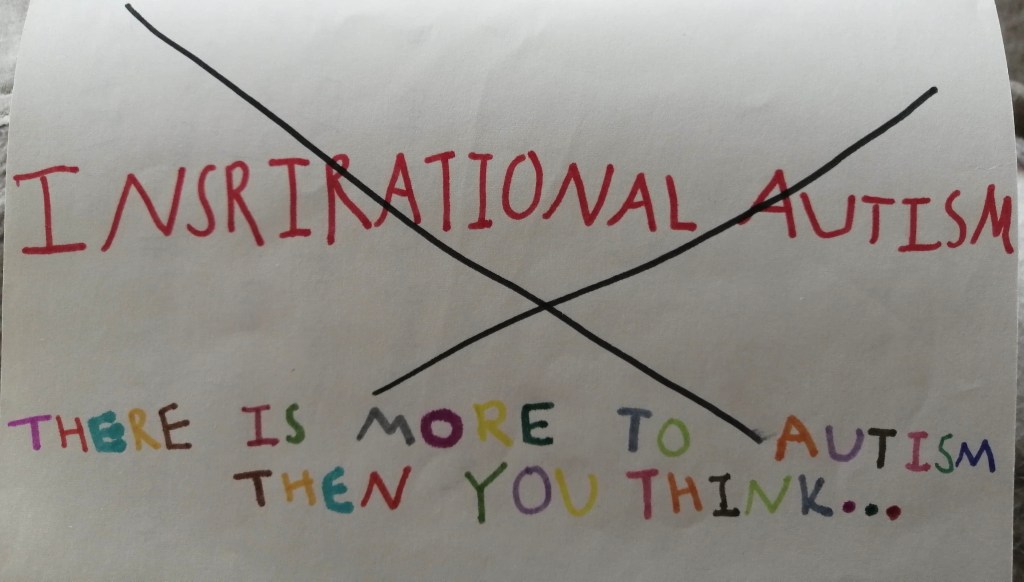
There is a habit for the media to portray autistic people as inspirational or exceptionally talented. Probably the most famous example of this is the film Rain Man [1] which focuses on the relationship between two long lost brothers, one with autism and the other without. The non-autistic brother’s intentions are to steal the autistic brother’s inheritance, but throughout the film he ultimately finds the brother inspirational and ends up fighting for his rights. The autistic brother is shown to be exceptionally talented as he can hold conversations, stay on schedule, compile statistics and memorise information quickly. This adds to the medias portrayal of disabilities in general being inspirational, often referred to as ‘inspiration porn’ by disability campaigners [2].

Another famous instance where the child is shown to have exceptional talents is ‘The curious incident of the dog in the night time’. In the book the young boy, who is accused of murdering a dog, is shown to be excellent at physics and math. Despite this criticism the book explores themes such as isolation and difficulty communicating as well as the feeling of being overwhelmed. It also nicely portrays  difficulties derived from being misunderstood through the frustration of the main character and the way he is easily blamed [3].

There are many other examples of these portrayals and they can be seen in two ways. On the one hand it helps break down negative stereotypes surrounding Autistic people. On the other hand it can be harmful and misleading, often people with Autism are expected to be some kind of genius due to these portrayals. This is often not the case and puts undue pressure and expectations on people, as well as completely ignoring the low-functioning end of the spectrum who need much more support. These portrayals can also lead to a lack of support and funding for autism related issues as autistic people are viewed as getting along fine. 

https://en.wikipedia.org/wiki/Rain_Man

https://www.youtube.com/watch?v=SxrS7-I_sMQ

https://en.wikipedia.org/wiki/The_Curious_Incident_of_the_Dog_in_the_Night-Time